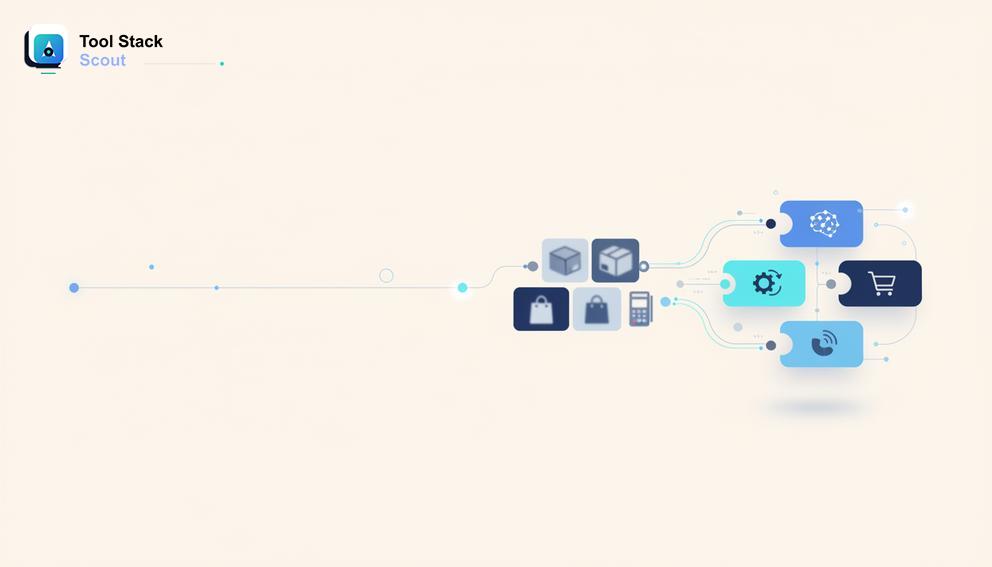
Running an online store in 2026 means competing with brands that already use machine learning to write product copy, recover abandoned carts, and answer support tickets at 3 a.m. The good news: the same technology is now affordable, plug-and-play, and built for merchants of every size. Picking the best AI tools for ecommerce is no longer about chasing hype, it is about choosing software that quietly compounds your margins.
This guide breaks down 15 platforms that consistently deliver results across customer support, marketing, merchandising, and operations. You will also find a practical framework for matching the right tool to your stage of growth.
Introduction to AI in Ecommerce
Artificial intelligence has shifted from a buzzword to a baseline expectation. Shoppers now assume that the product feed, the search bar, the chat window, and the post-purchase email all “know” who they are. Behind the scenes, that experience is powered by models that score behavior, predict demand, and generate creative on the fly.
For store owners, the payoff shows up in three places. First, conversion rate climbs when product discovery is personalized. Second, customer acquisition cost drops when ad creative and email copy are automatically tested. Third, support margins expand when AI deflects repetitive tickets and frees agents for complex cases. Choosing the best AI for ecommerce is essentially choosing where you want those gains to land first.
Before we get to the list, a quick note on methodology. The team at Tool Stack Scout evaluates each platform on integration depth, learning curve, real merchant reviews, and how cleanly it slots into a typical Shopify, BigCommerce, or WooCommerce stack.

Top AI Tools for Ecommerce
The platforms below cover the full lifecycle of an online business: pre-purchase discovery, the buying moment, and post-purchase loyalty. Most offer free trials, and several have generous free tiers for stores still finding product-market fit.
1. Fin
Fin, built by Intercom, is a conversational AI agent that resolves customer questions using your help center, past tickets, and product docs. For ecommerce stores, Fin shines on order status, returns, sizing, and policy questions, which usually account for the bulk of inbound volume. It hands off to a human agent when confidence drops, so customers never hit a dead end.
2. Gorgias
Gorgias is purpose-built for ecommerce help desks. Its AI features auto-tag tickets, draft replies grounded in your store data, and trigger refund or order-edit actions inside Shopify without an agent leaving the inbox. The pricing model scales with ticket volume, which keeps it friendly for small merchants.
3. Tidio
Tidio combines live chat, chatbots, and an AI assistant called Lyro. It is one of the easiest tools to deploy on a new store: install the widget, point Lyro at your FAQs, and within an afternoon you have an agent that answers questions, recommends products, and captures emails for abandoned-cart flows.
4. Jasper
Jasper is a content generation platform tuned for marketing teams. Use it to draft product descriptions, ad variations, landing-page copy, and SEO blog posts that stay on-brand. Templates for ecommerce, like Amazon listing optimizers and meta-description writers, cut hours off the weekly content calendar.
5. Shopify Magic
If your store runs on Shopify, the native Magic suite is the simplest starting point. It generates product descriptions, suggests email subject lines, fills FAQ pages, and edits product images, all inside the admin you already use. It is included with most Shopify plans, which makes it nearly free to test.
6. Klaviyo
Klaviyo’s AI layer powers send-time optimization, predictive lifetime value, churn risk scores, and subject-line generation. Combined with its segmentation engine, it lets small teams run the kind of behavior-triggered flows that used to require an in-house data scientist.
7. Adobe Sensei
Sensei is the machine learning backbone inside Adobe Commerce and the broader Experience Cloud. It powers product recommendations, search ranking, and content targeting at enterprise scale. It is heavier to implement than the others on this list, but for brands on Magento or Adobe Commerce, it unlocks personalization without third-party plugins.
8. Algolia
Search is the most underrated conversion lever on any catalog over a few hundred SKUs. Algolia uses AI to understand typos, synonyms, intent, and even natural-language queries like “blue summer dress under 60 dollars.” Faster, smarter search consistently lifts revenue per visitor.
9. Nosto
Nosto is a commerce experience platform that personalizes product feeds, on-site content, and email recommendations based on real-time shopper behavior. It is a strong choice for mid-market brands that have outgrown one-size-fits-all merchandising but are not ready for an Adobe-level rollout.
10. Octane AI
Octane AI builds interactive quizzes and conversational flows that double as product finders and zero-party data engines. Shoppers answer a few questions, get a tailored recommendation, and quietly enrich your customer profile for future segmentation. Skincare, supplements, and pet brands tend to see outsized lifts.

11. Persado
Persado generates and tests marketing language at scale, from email subject lines to push notifications and SMS. The platform measures which emotional triggers and word choices move your specific audience, then keeps refining. It is best suited for brands with serious campaign volume.
12. Syte
Syte specializes in visual AI: image search, “shop the look,” and similar-product recommendations powered by computer vision. For fashion, home goods, and jewelry, it turns inspiration photos into checkout-ready product pages.
13. Drift
Drift focuses on conversational marketing. Its AI chatbots qualify visitors, book demos, and route hot leads to sales in real time. Direct-to-consumer brands with high-ticket items or B2B ecommerce stores tend to extract the most value here.
14. Rep AI
Rep AI is a Shopify-native shopping assistant that detects when a visitor is about to bounce and engages them with a tailored conversation. It can answer product questions, surface comparable items, and apply discounts mid-chat. Think of it as a digital sales associate who never takes a break.
15. Lily AI
Lily AI enriches your product catalog with customer-centric attributes, the words shoppers actually search for, rather than the SKU language merchandisers usually write. The result is better on-site search, better paid-search performance, and tighter feed quality for Google Shopping.
Comparison at a Glance
| Tool | Primary Use Case | Best For |
|---|---|---|
| Fin | AI customer support | High ticket volume |
| Gorgias | Ecommerce help desk | Shopify and BigCommerce stores |
| Tidio | Live chat and chatbots | Small to mid-size merchants |
| Jasper | AI content writing | Marketing teams |
| Shopify Magic | Native AI assistant | Shopify-only stores |
| Klaviyo | Email and SMS automation | DTC brands |
| Adobe Sensei | Enterprise personalization | Adobe Commerce users |
| Algolia | AI-powered search | Large catalogs |
| Nosto | On-site personalization | Mid-market brands |
| Octane AI | Quizzes and zero-party data | Beauty, wellness, pet |
| Persado | Marketing language testing | Enterprise email programs |
| Syte | Visual search | Fashion and home goods |
| Drift | Conversational marketing | High-ticket and B2B |
| Rep AI | Sales assistant chatbot | Shopify stores |
| Lily AI | Product attribute enrichment | Fashion and home retail |
How AI Tools Can Enhance Ecommerce
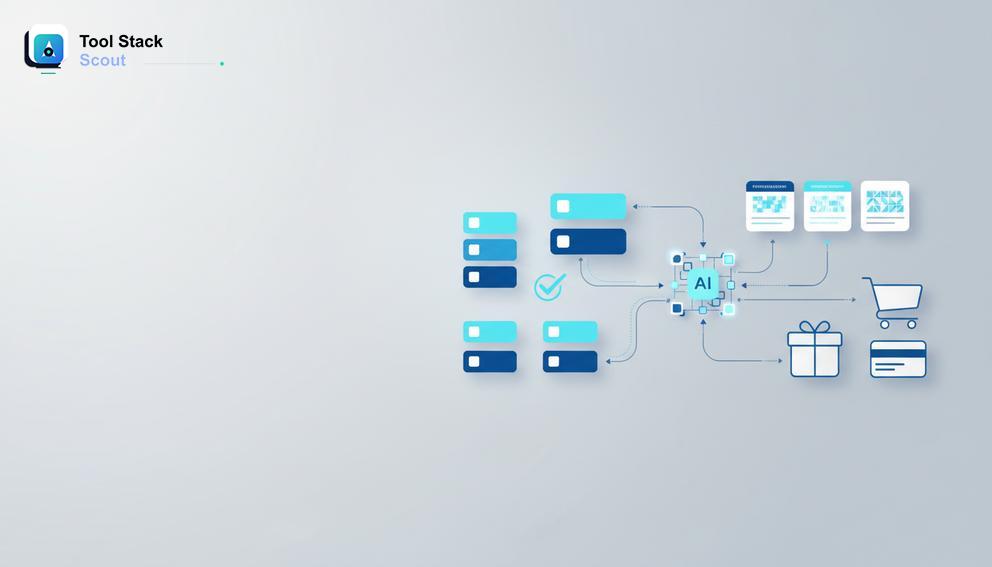
Tools matter less than the workflows they unlock. Once you understand the four jobs AI does best in a store, choosing among them becomes simple. Below are the two highest-leverage categories for most merchants.
Personalization
Personalization is the moment a shopper feels the store was built for them. AI makes that practical at scale by analyzing behavior, intent signals, past purchases, and even weather or location, then adjusting the experience in real time. Concretely, that looks like:
- Homepage hero banners that swap based on whether the visitor is a returning customer or a first-time browser from a paid ad.
- Product recommendation strips that learn from session-level clicks, not just historical co-purchases.
- Search results re-ranked by the individual shopper’s affinity for color, price band, or brand.
- Email subject lines and send times tuned to each subscriber’s open habits.
Stores that personalize consistently see higher average order value because shoppers reach checkout with more relevant items in the cart, not because they were pushed harder.
Automation
Automation is where AI buys back the most time. Repetitive marketing, support, and operations tasks become background processes that run while you focus on product and brand. Practical examples include:
- Drafting and scheduling abandoned-cart, browse-abandonment, and post-purchase email flows.
- Auto-tagging and triaging support tickets so urgent issues skip the queue.
- Generating ad creative variants and testing them against a control without manual lift.
- Forecasting demand so reorder points and ad spend stay in sync with actual sales velocity.
Choosing the Right AI Tool for Your Business
The temptation, after reading a list like this, is to install five tools at once. Resist it. Stacked AI rarely compounds, it overlaps. A cleaner approach is to identify the single biggest leak in your funnel and patch it first. Use the checklist below.
- Diagnose the bottleneck. Is your problem support volume, low conversion, weak email revenue, or thin organic traffic? Each maps to a different category in the list above.
- Match your stack. A Shopify store should start with Shopify Magic plus one specialized tool. A headless or Adobe Commerce store has different native options.
- Check integration depth. A tool that talks fluently to your CMS, ESP, and customer data platform will outperform a more powerful tool that lives in a silo.
- Pilot, then expand. Pick one use case, set a 30-day measurement window, and decide based on revenue per visitor, ticket deflection rate, or AOV, not vibes.
- Budget for the long tail. AI tools tend to deliver compounding returns. A platform that looks expensive in month one often becomes the cheapest line item in month twelve.
If you want to dig into adjacent categories, browse the wider library of AI Tools we have reviewed, including options for SEO, design, analytics, and operations.
Final Thoughts
The merchants pulling ahead in 2026 are not the ones with the most tools, they are the ones with the right tools wired into a clean workflow. Start with the friction point that is costing you the most revenue, choose one platform from the list, and give it room to learn. Once the first win is on the board, layer in the next. That is how the best AI tools for ecommerce stop being software line items and start behaving like quiet, full-time members of your team.