Both Perplexity and ChatGPT are powerful AI tools, but they’re built for different jobs. If you’ve been using one and wondering whether the other might serve you better — or if you’re just starting out and trying to decide — this comparison breaks down exactly where each tool excels, where it falls short, and which one fits your actual workflow.
This isn’t a feature checklist. It’s a practical look at how each tool behaves in real use: for research, writing, problem-solving, and daily information tasks.
Perplexity Vs Chatgpt Comparison
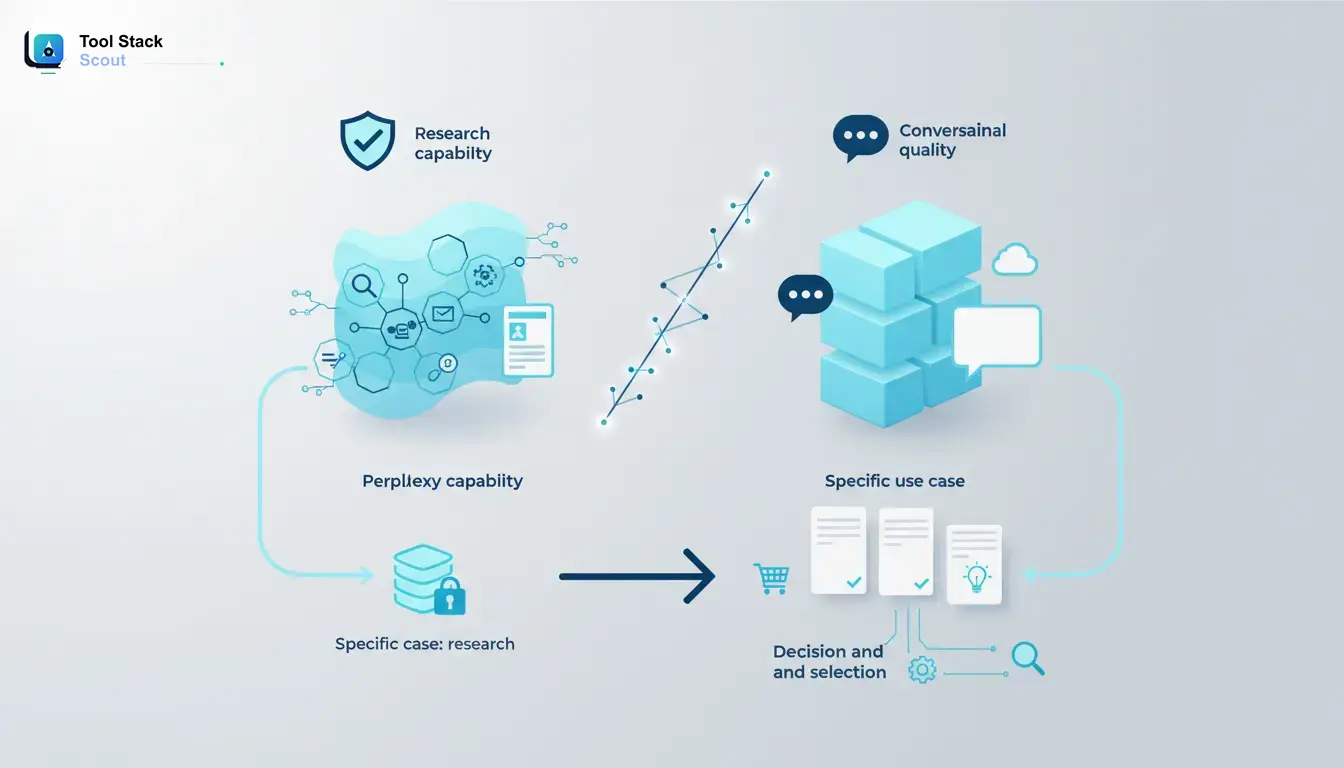
Perplexity is a real-time AI search engine that cites its sources, making it ideal for research and fact-finding. ChatGPT is a conversational AI built for extended dialogue, creative work, coding, and complex reasoning. They overlap on general Q&A but diverge sharply when your task requires sourced accuracy versus open-ended generation.
Introduction: What Are Perplexity and ChatGPT?
Perplexity AI launched as an answer engine — a tool that combines large language model reasoning with live web search and source citations. When you ask Perplexity a question, it retrieves current information from across the web and presents a synthesized answer with numbered references you can verify. That design decision shapes nearly everything about how the product feels to use.
ChatGPT, developed by OpenAI, is a general-purpose conversational AI. It draws on a vast training dataset and, in its more capable versions, can also search the web, run code, analyze files, and generate images. Where Perplexity is built around retrieval-first answers, ChatGPT is built around conversation-first flexibility. You can take it in almost any direction — technical, creative, analytical — and sustain a long, context-rich dialogue across many turns.
Understanding this architectural difference is the key to choosing between them. Neither tool is universally better. The right choice depends on what you’re trying to do and how you prefer to work with AI.
Perplexity: Strengths and Limitations
Perplexity’s core strength is its research workflow. It doesn’t just generate plausible-sounding answers — it fetches current sources and attributes claims directly. For anyone who has wasted time fact-checking AI-generated content that turned out to be confidently wrong, this is a meaningful shift. You can see exactly where each piece of information came from and click through to verify it yourself.
This makes Perplexity particularly useful for time-sensitive research: checking current prices, tracking recent news, looking up specifications, or getting a quick briefing on a fast-moving topic. Its interface is clean and task-focused. You ask, it answers, it cites. There’s less friction than a full conversational AI for simple lookup tasks.
Perplexity also offers “Spaces,” which let you build persistent research threads or share research sessions with others — a useful feature for teams doing ongoing investigative or competitive research.
Where Perplexity shows its limits is in anything that requires sustained creative or analytical dialogue. It’s an answer engine, not a reasoning partner. It doesn’t hold context across sessions the way a full conversation model does, and it isn’t designed for iterative creative work — writing a draft, revising it, changing tone, expanding a section, and then editing again over many turns. For longer, more complex tasks, the retrieval-focused design can feel constraining.
ChatGPT: Strengths and Limitations
ChatGPT’s strongest suit is flexibility. It can write, edit, summarize, translate, explain concepts at any depth, generate and debug code, analyze spreadsheets, build structured documents, and maintain a coherent conversation across dozens of turns. The range of tasks it handles well is broader than any single-purpose AI tool, and the ability to redirect, refine, and build on previous responses in the same session is genuinely powerful for complex work.
For creative tasks — writing a marketing email, drafting a business proposal, generating story ideas, producing polished copy in a specific voice — ChatGPT remains the stronger choice. It can be given detailed instructions, follow style guides, and produce nuanced output that Perplexity simply isn’t designed to deliver.
For technical users, ChatGPT’s code interpreter and advanced reasoning capabilities (available in higher-tier models) make it a practical development assistant. It can write functional code, explain what it’s doing, debug errors iteratively, and adapt based on your feedback.
ChatGPT’s main limitation is a familiar one: when it doesn’t know something — especially something recent or highly specific — it can generate confident-sounding but inaccurate answers without flagging the uncertainty. Its web browsing feature addresses some of this, but the experience is less consistent than Perplexity’s dedicated retrieval approach. If your primary need is reliable, sourced factual information, ChatGPT’s general-purpose design is a trade-off.
Head-to-Head: Perplexity vs ChatGPT in Detail
Research and Factual Accuracy
On pure research tasks — finding current information, comparing products, summarizing recent events — Perplexity has a structural advantage. Its retrieval-first design means answers are grounded in actual web sources, and citations let you audit the output. This is particularly valuable in professional contexts where accuracy matters and you can’t afford to chase down hallucinated facts.
ChatGPT can browse the web in its more capable versions, but this capability is less deeply integrated into its core experience. It works well for follow-up searches within a conversation, but it isn’t Perplexity’s dedicated answer-engine approach. If your primary workflow is research, Perplexity wins on reliability and transparency.
Creative and Generative Work
ChatGPT is significantly stronger for generative tasks. Writing long-form content, adapting tone, producing structured documents, generating ideas across many formats, and iterating through revisions in a single session — these are all areas where the conversational model architecture shines. Perplexity isn’t designed for this kind of sustained creative back-and-forth.
Coding and Technical Tasks
For developers and technical users, ChatGPT (particularly with its advanced models) handles code generation, debugging, explanation, and refactoring well. It can run code directly, interpret outputs, and work iteratively on technical problems. Perplexity can answer technical questions and retrieve documentation, but it doesn’t replicate the hands-on coding assistant experience.
Conversation Quality and Context Retention
ChatGPT maintains context across long conversations more naturally and can reference earlier points in the thread, build on prior answers, and shift direction based on your feedback — all within a single session. Perplexity is more transactional: each query is largely self-contained, which suits quick lookups but limits complex, multi-turn problem solving.
| Criteria | Perplexity | Chatgpt | Quick verdict |
|---|---|---|---|
| Best for | Researchers, students, journalists, and professionals who need fast, sourced answers to current questions | Writers, developers, analysts, and anyone who needs flexible AI for creative, technical, or extended conversational tasks | Choose Perplexity for research; choose ChatGPT for creation and complex reasoning |
| Core use case | Real-time web search with cited answers, competitive research, quick factual lookups, news monitoring | Long-form writing, coding, document analysis, brainstorming, tutoring, and multi-step problem solving | Perplexity = find; ChatGPT = create and think |
| Strengths | Source citations on every answer, real-time web access baked in, clean research-focused interface, Spaces for collaborative research | Broad task range, strong creative and code output, deep context retention across long sessions, file and image analysis | Perplexity leads on sourced accuracy; ChatGPT leads on versatility and depth |
| Limitations | Not built for iterative creative work, limited multi-turn reasoning depth, less useful when your task has nothing to do with information retrieval | Can generate confident but inaccurate answers without flagging uncertainty; web browsing less consistent than Perplexity’s retrieval | Verify ChatGPT outputs on factual claims; verify Perplexity when your task needs creative or analytical depth |
| Best decision rule | Choose Perplexity when you need current, verifiable information and want citations you can audit | Choose ChatGPT when you need to create, code, analyze documents, or sustain a complex, evolving conversation | Many users benefit from both: Perplexity for research, ChatGPT for everything built on top of that research |
Who Should Use Each Tool?
The perplexity ai vs chatgpt comparison comes down to your dominant workflow. If most of what you do with AI involves finding things out — verifying facts, reading up on topics, tracking industry news, or doing background research before a meeting — Perplexity is built for exactly that. Its sourced, real-time approach reduces the fact-checking burden that comes with using a general AI.
If your dominant use is creating things — content, code, analysis, plans, summaries, responses — ChatGPT is the more capable environment. It’s also the better choice if you use AI as a thinking partner: working through a decision, exploring different angles on a problem, or iterating on something over many back-and-forth turns.
For many professionals, the practical answer is to use both. Perplexity handles the research phase; ChatGPT handles the creation and reasoning phase. They complement each other more than they compete. If you’re forced to pick just one, ask yourself: do I primarily need to find information or do something with it? That question usually gives you the answer.
Beginners often find Perplexity easier to start with — the interface is straightforward, and seeing cited sources helps build trust in the output. ChatGPT has a higher ceiling but also a steeper learning curve for getting the most out of it through well-crafted prompts.
For an overview of how these tools fit into a broader AI toolkit, visit the AI Tools category at Tool Stack Scout, where we review and compare tools across different use cases and user types.
Final Verdict
Perplexity and ChatGPT are both genuinely useful — but they’re solving different problems. Perplexity is the better tool when accuracy and source transparency matter most, and when your task is fundamentally about retrieving and synthesizing current information. ChatGPT is the better tool when you need breadth, creativity, code, or a capable reasoning partner across a wide range of open-ended tasks.
Neither tool should be chosen based on brand recognition or hype. Choose based on what you actually do day to day. If your work is research-heavy, Perplexity earns its place. If your work is creation-heavy, ChatGPT earns its. And if you need both — which many people do — using them together is a practical, low-cost strategy that plays to the strengths of each.