If you spend too much time chasing replies, checking calendars, and fixing double bookings, the best ai assistant for scheduling meetings can remove a surprising amount of busywork. The right tool does more than send a booking link. It can read availability, protect focus time, handle reschedules, reduce conflicts, and in some cases manage the back-and-forth for you.
This guide compares the strongest options for solo professionals, executives, sales teams, recruiters, and growing companies that need faster scheduling without losing control of their calendars. If you are exploring related workplace software, Tool Stack Scout also has a broader guide to the top personal assistant platforms and more coverage in the AI Tools category.
Ai Assistant For Scheduling Meetings
The best AI meeting scheduling tools help you book faster, reduce calendar conflicts, and automate rescheduling or reminders without forcing every workflow into the same template. For most buyers, the right choice depends on whether you need simple external booking, internal calendar coordination, or a more hands-on assistant experience.
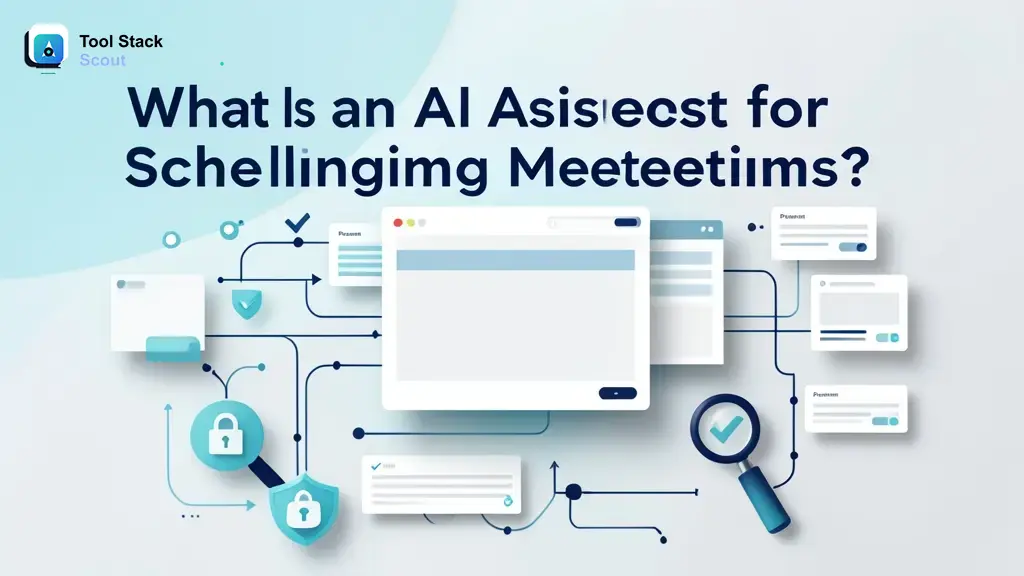
What Is an AI Assistant for Scheduling Meetings?
An AI assistant for scheduling meetings is software that helps coordinate time between people with less manual effort. It typically connects to your calendar, checks availability, prevents obvious conflicts, and offers open time slots for booking. More advanced tools can also reschedule meetings, send reminders, suggest better meeting times, or protect focus blocks automatically.
That is what separates these tools from a basic booking page. A simple scheduler mostly lets someone pick from open slots you have already exposed. A stronger AI scheduling assistant actively manages constraints behind the scenes, such as travel buffers, team calendars, round-robin assignment, recurring priorities, or last-minute conflicts.
What to Look for in an AI Meeting Scheduling Tool
Before you compare brands, define the job you actually need the tool to do. Some products are best at external booking with a polished scheduling link. Others are better at internal calendar automation, protecting deep work, or coordinating a busy team across shared calendars.
The most useful buying criteria are practical. Start with calendar sync and availability controls. If the system cannot accurately reflect when you are free, nothing else matters. After that, look at conflict handling, rescheduling, reminders, integrations with email and video tools, and whether the setup feels realistic for your team.
- Calendar sync and conflict resolution: The tool should work reliably with the calendars your team already uses and avoid double booking or exposing time you want protected.
- Availability controls: Good tools let you set working hours, buffers, meeting limits, focus time, travel time, and different rules for different meeting types.
- Rescheduling and reminders: Useful automation includes follow-ups, confirmations, reminders, and simple ways to move meetings without restarting the whole thread.
- Team scheduling: If you manage a team, look for round-robin routing, shared calendars, pooled availability, and support for internal coordination.
- Ease of use: A powerful tool that takes weeks to configure may be the wrong fit for a small team that just needs fewer scheduling emails.
- Workflow fit: Some tools are built around booking links, others around calendar optimization, and others around human-like assistant workflows. Pick the model that matches how people already schedule with you.
| Tool | Best for | Why it stands out | Main trade-off |
|---|---|---|---|
| ai assistant for scheduling meetings | Busy professionals who need smarter booking and calendar control rather than a basic link alone | This category stands out by reducing back-and-forth while also helping manage availability, conflicts, and reschedules | Fit varies widely because some tools focus on booking, while others focus on deeper calendar automation |
| AI scheduling assistant | Users who want automation around reminders, follow-up steps, and day-to-day meeting coordination | It deserves inclusion because it can make scheduling feel more active and context-aware than static booking pages | Advanced assistant features may depend on integrations, setup quality, or paid plans |
| meeting scheduling | Client-facing teams, recruiters, and operators who need faster appointment setting | It remains central because speed, fewer emails, and clearer time selection often solve the biggest workflow pain first | Simple scheduling alone may not fix internal calendar overload or focus-time protection |
| calendar automation | Managers and teams with crowded calendars, recurring meetings, and constant changes | It deserves attention when the real problem is not booking access but keeping the week usable after meetings land | These tools can feel heavier to configure if you only need lightweight external booking |
| calendar sync | Teams that rely on multiple calendars, shared visibility, or cross-functional coordination | Strong sync matters because scheduling accuracy depends on current availability across the systems people already use | Weak integration support can create friction even if the scheduling interface looks polished |
| availability | Anyone who needs tight control over time slots, buffers, limits, and meeting rules | Availability settings are what turn a generic scheduler into a practical tool for real working patterns | Poor setup can lead to bad bookings, even with otherwise capable software |
The practical takeaway: do not choose by brand familiarity alone. If your biggest pain is people picking times, a booking-first tool is usually enough. If your pain is calendar chaos after the meeting gets booked, choose a calendar-first product instead.
Best AI Assistants for Scheduling Meetings
1. Reclaim AI
Reclaim AI is the strongest fit for people whose real problem is not just booking meetings but protecting time around them. It is especially useful for managers, operators, and teams whose calendars fill up quickly and need guardrails around focus time, recurring work, and internal collaboration.
What makes it stand out is that it treats your calendar like a system to optimize. That makes it a better choice than a traditional scheduler when your week changes constantly and you need the tool to adapt. The trade-off is that it is less about polished external scheduling as a first impression and more about intelligent time management behind the scenes.
Best for: Internal coordination, focus-time protection, and busy multi-calendar schedules.
2. Clara
Clara is best for people who want meeting scheduling to feel delegated rather than automated. Founders, executives, recruiters, and executive assistants often prefer this style when scheduling happens through email conversations and white-glove communication matters.
Its value is not just speed. It is the reduction in friction when something closer to an assistant workflow manages the exchange. Clara makes the most sense when meeting volume is high enough to justify a more hands-off approach. If you only need a booking page, it may be more tool than you need.
Best for: Executive scheduling, recruiting, and high-touch coordination over email.
3. SchedulerAI
SchedulerAI is a strong option when scheduling is tied closely to lead flow, customer response speed, or operational workflows. That makes it relevant for sales teams, customer-facing teams, and organizations where every delay between interest and a booked meeting can hurt momentum.
The practical appeal is that it can turn scheduling into part of a larger process rather than a standalone task. That is useful when you need routing, faster response, or automation around meeting creation. The trade-off is that simpler users may find this approach heavier than they need.
Best for: Revenue teams, service workflows, and faster booking from inbound conversations.
4. Sunsama
Sunsama is not a pure scheduling tool first. It is more compelling for individuals who want their meetings to fit into a better daily plan. If you already struggle with overloaded workdays, it can help you think beyond “Can someone book this slot?” to “Should this meeting live here at all?”
That makes Sunsama a good choice for professionals who want more intentional calendar control. It is less ideal if your main requirement is high-volume meeting intake from clients or prospects.
Best for: Personal planning, workload balance, and deliberate scheduling habits.
5. Calendly
Calendly remains one of the easiest ways to get started with meeting scheduling. It is usually the lowest-friction choice for consultants, sales reps, agencies, recruiters, and anyone who regularly sends booking links. The product is familiar, straightforward, and easy for invitees to understand.
Its main strength is clarity. If your goal is to stop the email back-and-forth quickly, Calendly still does that well. Where it can fall short is deeper calendar intelligence compared with products built around active optimization or assistant-style coordination.
Best for: Fast external scheduling with minimal training.
6. Motion
Motion works well when meetings, tasks, and calendar planning constantly collide. Instead of treating meetings as isolated events, it tries to rebalance your broader schedule around changing priorities. That makes it attractive for founders, operators, and small teams wearing multiple hats.
The catch is that Motion works best when you buy into its system. If you only want a lightweight scheduler, it may feel too opinionated. If you want one tool to organize both your meetings and the work around them, it becomes more compelling.
Best for: All-in-one planning where scheduling and task management are tightly connected.
7. Clockwise
Clockwise is worth considering if your main problem is fragmented team time. It is known more for calendar optimization than for customer-facing scheduling, which makes it valuable for internal collaboration and protecting blocks for focused work.
This is a good fit for organizations trying to create more uninterrupted time across teams. It is not the first pick for public-facing booking workflows, but it can be a smart choice for internal calendar hygiene.
Best for: Team-wide focus time and internal meeting coordination.
8. x.ai
x.ai has long been associated with AI-powered scheduling conversations, so it still matters in buyer research even as the category evolves. People drawn to it are usually looking for less manual back-and-forth and a more assistant-like scheduling feel.
The deciding factor here is whether that workflow style matches how you already communicate. If most of your scheduling happens through quick booking links, another tool may be simpler. If email coordination is the bottleneck, assistant-style products deserve a closer look.
Best for: Assistant-style scheduling in email-heavy workflows.
9. Doodle
Doodle is still useful when the main challenge is collecting availability from multiple people rather than managing one person’s booking page. It fits group coordination, panels, interviews, and meetings where consensus is the hard part.
It is less of a full AI calendar assistant than some other tools here, but it earns a place because many teams do not need deep automation every day. They need a faster way to land on a time that works.
Best for: Group availability polls and multi-person coordination.
If you want the shortest recommendation from this section, pick Reclaim AI for intelligent calendar management, Calendly for the easiest client-facing booking, Clara for high-touch executive scheduling, and Motion if scheduling is inseparable from planning your work.
Best AI Scheduling Tools by Use Case
Best for solo professionals and executives
For solo professionals who mainly need easy booking, Calendly is usually the cleanest starting point. For executives and founders whose meetings are high volume and often negotiated over email, Clara is the more natural fit because it reduces coordination work instead of just exposing slots.
Best for busy teams and internal coordination
Reclaim AI and Clockwise are better options when your biggest challenge is internal calendar overload. They make more sense than a standard booking tool when you need focus blocks, smarter conflict handling, and healthier team scheduling patterns.
Best for client-facing scheduling
Calendly is often the easiest recommendation here because it is familiar and low friction for invitees. SchedulerAI becomes more appealing when scheduling sits inside a sales or service workflow and speed to meeting matters as much as the calendar event itself.
Best free or low-friction options to start with
Calendly is typically the safest low-friction entry point because setup is fast and the workflow is easy to understand. If you already know your issue is not booking access but poor calendar control, Reclaim AI may be the better test even if it asks for more configuration upfront.
The decision rule is simple: if outsiders need to book you, start with Calendly; if your own calendar keeps breaking after meetings get booked, start with Reclaim AI; if you want scheduling to feel delegated, start with Clara.

Benefits of Using AI for Meeting Scheduling
- Less back-and-forth: Instead of long email threads, invitees get clear options and faster booking.
- Fewer conflicts: Better tools account for availability rules, time buffers, and calendar overlap before problems happen.
- Better time blocking: Calendar-first tools can preserve focused work instead of letting meetings consume every open hour.
- Faster rescheduling: When plans change, AI assistance can reduce the manual work of finding a replacement slot.
- Stronger meeting hygiene: Reminders, limits, and booking rules help prevent no-shows and low-value meetings.
The biggest benefit is not just saving minutes. It is reducing the mental tax of constantly negotiating time.
Potential Limitations to Keep in Mind
These tools are only as useful as the rules behind them. If your availability settings are sloppy, your AI scheduling assistant may confidently book the wrong time. Teams also run into issues when they expect one tool to solve both external booking and internal calendar planning equally well.
It is also worth remembering that AI assistance does not replace scheduling policy. If your organization has unclear ownership, inconsistent meeting lengths, or no rules around focus time, software can help, but it will not fix those habits by itself.
- Setup quality matters: Buffers, working hours, calendars, and meeting types need clean configuration.
- Tool categories differ: Some tools are schedulers, some are calendar optimizers, and some are assistant-style coordinators.
- Integrations can decide fit: A good tool that does not work smoothly with your email or calendar stack can create new friction.
- Team rollout takes care: Shared scheduling and round-robin workflows need testing before broad adoption.
How to Choose the Right AI Assistant for Scheduling Meetings
- Map your scheduling volume: If you book a few meetings a week, simplicity matters more than advanced automation. High-volume teams can justify a more capable system.
- Identify the bottleneck: Is the pain point external booking, internal calendar chaos, or email negotiation? Your answer narrows the shortlist quickly.
- Match the communication style: Booking-link tools work best when invitees are comfortable self-scheduling. Assistant-style tools are better when scheduling is conversational.
- Test real integrations: Connect the calendars, video tools, and inbox workflows you actually use before rolling anything out.
- Evaluate change tolerance: Some products fit neatly into your current process, while others ask you to adopt a new planning system.
If you want a broader place to compare workplace software, you can also browse the main Tool Stack Scout library.

Final Verdict
For most people, Reclaim AI is the best overall choice when the real goal is smarter calendar control, fewer conflicts, and better use of time across a busy week. Calendly is the better pick if your top priority is getting meetings on the books quickly with minimal friction for clients or prospects. Clara is the strongest choice when scheduling needs to feel delegated, especially for executives or high-touch workflows.
If you only want one decision rule, use this: choose Calendly for straightforward external booking, choose Reclaim AI for active calendar management, and choose Clara when human-like coordination matters more than sending a link. If you want a wider view of adjacent tools before deciding, the top personal assistant guide is a useful next comparison.
FAQs About AI Assistants for Scheduling Meetings
Is there an AI tool for scheduling?
Yes. Several tools help automate meeting scheduling by reading availability, offering time slots, handling reminders, and reducing conflicts. The best choice depends on whether you need basic appointment booking, internal calendar automation, or assistant-style coordination.
What is the best AI assistant for meetings?
For scheduling specifically, Reclaim AI is one of the strongest all-around choices for calendar intelligence, while Calendly is often the easiest for self-serve booking and Clara is better for delegated scheduling workflows. The best option depends on how your meetings get arranged today.
How much do AI scheduling assistants cost?
Costs vary widely by product and plan. Some tools may offer a lightweight entry point, while more advanced automation, team workflows, or concierge-style scheduling often sit on higher tiers. Pricing structures can also change over time, so compare value based on workflow fit, not just entry cost.
Which AI is best for planning and scheduling?
If you want planning and scheduling together, Motion and Sunsama are stronger fits because they connect meetings to broader workload management. If you mainly want calendar automation and meeting control, Reclaim AI is often the better fit.
Are AI meeting scheduling tools worth it for small teams?
Usually yes, if the team books enough meetings for coordination to become a weekly headache. Small teams get the most value when the tool reduces back-and-forth, protects focus time, and works cleanly with existing calendars.
What is the difference between a booking link and an AI scheduling assistant?
A booking link lets people pick from available times. An AI scheduling assistant can go further by adjusting availability rules, managing buffers, resolving conflicts, rescheduling meetings, and sometimes coordinating conversations around the booking itself.