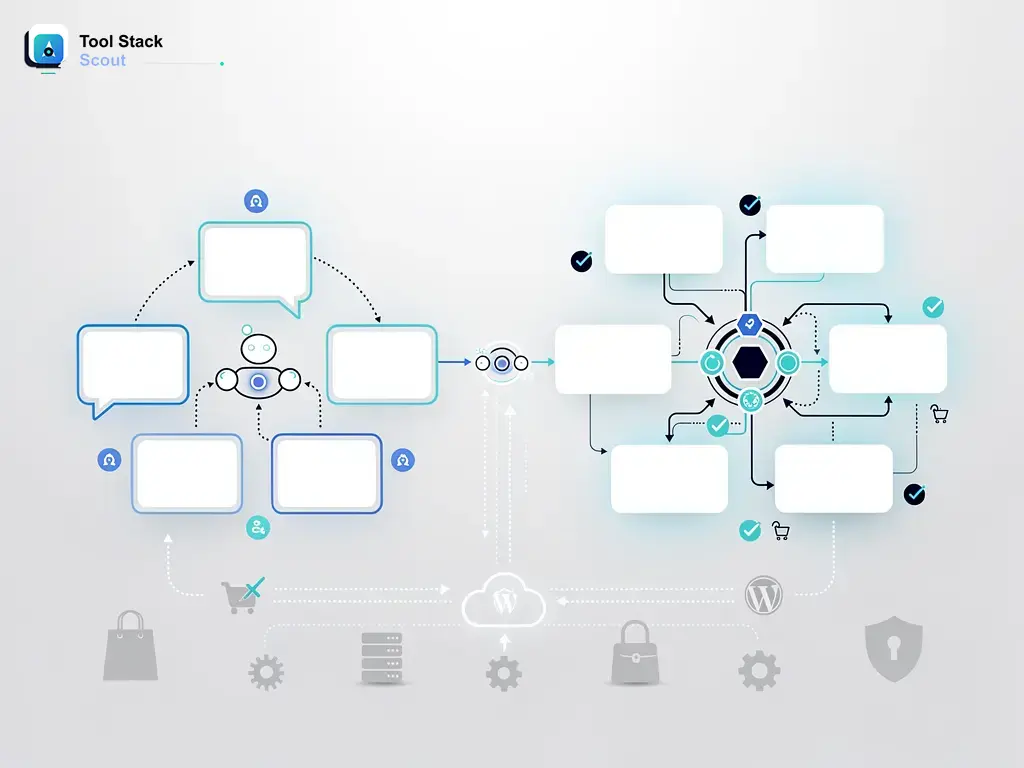
The terms “chatbot” and “virtual agent” get used interchangeably in a lot of vendor marketing—but they describe meaningfully different technologies. For technology managers, IT decision-makers, and business buyers evaluating AI-powered automation, that distinction matters before you sign a contract or kick off a deployment project.
Both tools automate conversations. Both reduce the volume of requests that need a human to resolve. But they operate at very different levels of sophistication and are designed for very different problems. Treating them as equivalent can lead you to overspend on capabilities you don’t need—or underinvest in automation that could meaningfully transform your support operation.
This comparison breaks down what each technology does, where each performs best, and how to tell which one fits your situation.
Chatbot Vs Virtual Agent
Chatbots automate scripted Q&A for predictable, high-volume queries; virtual agents use advanced AI to understand intent, retain context, and complete multi-step tasks across connected systems. The gap between them is real—and choosing the wrong tool for your workflow can undermine the investment.
What Is a Chatbot?
A chatbot is a software program designed to simulate conversation with users within a defined, predictable scope. The simplest versions follow decision-tree logic—branching rules that route users based on their input. More modern chatbots layer in natural language processing (NLP) to handle a wider variety of phrasings, though their responses are still largely template-driven rather than dynamically reasoned.
Chatbots are built for high-volume efficiency within constraints. They’re optimized for the kinds of repetitive questions that flood support queues: “What are your business hours?” “Where is my order?” “How do I reset my password?” When those questions repeat hundreds of times a day, a well-configured chatbot can deflect a significant share without human involvement.
From a deployment standpoint, chatbots are relatively fast to implement. Many platforms offer pre-built templates for common industries, and businesses can go live with a basic configuration in days rather than months. That speed-to-value explains why chatbot adoption has been widespread across retail, banking, healthcare intake, and hospitality.
The core limitation is scope. Chatbots aren’t designed to reason through complex or open-ended requests. They typically don’t retain memory across sessions, can’t take action in external systems without significant custom integration, and break down when a user’s question falls outside the trained scenarios. When that happens, the fallback is usually a handoff to a live agent—which partially offsets the efficiency gains if it happens too often.
What Is a Virtual Agent?
A virtual agent is a more sophisticated layer of AI that goes beyond scripted conversation. While a chatbot answers questions, a virtual agent is designed to complete tasks. It can understand user intent at a deeper level, retain context across a conversation, and take real action—updating a record, filing a ticket, processing a transaction—without requiring the user to be transferred to a human.
The technology stack behind virtual agents typically includes advanced natural language understanding, machine learning models trained on domain-specific data, and integration layers that connect the agent to CRMs, ERPs, databases, and other enterprise systems. This is what allows a virtual agent to process a refund request end-to-end rather than just explaining the refund policy and handing the user off.
Virtual agents are increasingly deployed in IT helpdesks, HR self-service portals, financial services, and complex customer service environments where simple Q&A isn’t sufficient. An enterprise might use a virtual agent to handle employee onboarding questions, walk users through multi-step troubleshooting flows, or resolve billing disputes—tasks that previously required a trained human agent for every interaction.
The trade-off is cost and implementation complexity. Building a capable virtual agent requires substantial investment in training data, system integration, and ongoing tuning. For organizations with straightforward, repetitive support needs, a virtual agent may add overhead without proportionate return on investment.
Chatbot vs Virtual Agent: Where the Differences Actually Matter
The clearest way to understand the gap between chatbots and virtual agents is to follow the same user request through each system. A user sends a message: “I was charged twice for my last order and I want a refund.”
In a chatbot system, the bot identifies relevant keywords—”charged twice,” “refund”—and routes the user to a scripted response: a link to the returns policy, a form to fill out, or a prompt to call support. The bot doesn’t verify the account, can’t issue the refund, and can’t confirm whether the duplicate charge actually occurred. The user still has to take additional steps and, in many cases, still ends up talking to a human.
In a virtual agent system, the same message triggers intent recognition. The agent identifies the user, pulls up their order history via API, confirms the duplicate transaction, initiates the refund process within the payment system, and sends a confirmation—all within the same conversation. No handoff required.
That gap—answering versus acting—is the core distinction between the two technologies. It surfaces in four specific ways: the complexity of requests each can handle, how they process and retain context, how deeply they integrate with other systems, and the total cost of implementation and maintenance. These factors should drive your evaluation, not the marketing label a vendor chooses to apply.
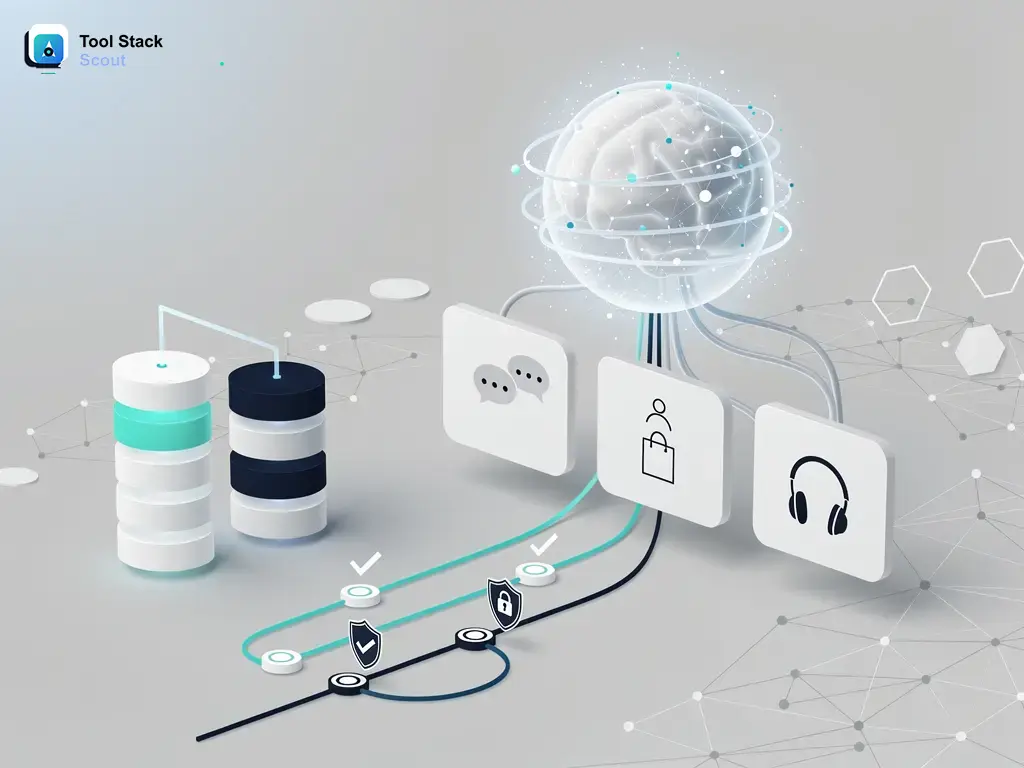
| Criteria | Chatbot | Virtual Agent | Quick verdict |
|---|---|---|---|
| Best for | Small to mid-sized businesses handling high volumes of repetitive queries—FAQs, order tracking, basic troubleshooting, and lead qualification | Enterprise teams needing AI that can understand complex intent, retain context across multi-turn conversations, and execute tasks in integrated systems like CRMs and ERPs | Chatbots for FAQ deflection; virtual agents for goal-driven task completion |
| Core use case | Answering common support questions, guiding users through web forms, delivering product information, and routing to human agents when queries fall out of scope | Processing refund requests end-to-end, managing IT helpdesk tickets, handling HR self-service tasks, and completing multi-step troubleshooting flows without human handoff | Chatbots answer; virtual agents act—that’s the clearest use-case dividing line |
| Strengths | Fast to deploy, low cost to implement and maintain, effective for predictable scenarios with limited branching, widely available on established platforms | Context-aware across multi-turn conversations, deep integration with enterprise systems, handles ambiguous or open-ended requests, scales with organizational complexity | Chatbots win on speed to value and cost; virtual agents win on capability and adaptability |
| Limitations | Struggles with open-ended queries, no memory across sessions by default, can’t execute tasks in external systems without heavy custom work, frustrates users when queries exceed its scope | Higher implementation and maintenance cost, requires quality training data and ongoing tuning, deeper technical setup, and may be overkill for simple FAQ-style deployments | Both underperform outside their intended scope—underestimating workflow complexity is the main risk to check before deciding |
| Best decision rule | When most queries are repetitive and answerable with a scripted reply, and tasks don’t require system access or multi-step reasoning to resolve | When users need to complete tasks rather than just get answers, when context must carry across turns, or when the AI needs to take action inside other business tools | Map your five most common support requests—if they’re narrow and predictable, a chatbot is enough; if they require back-end access or multi-step resolution, move up the stack |
How to Choose Between a Chatbot and a Virtual Agent
The decision usually comes down to two factors: the complexity of the tasks you need to automate and the depth of system integration your workflows require.
If your support queue is dominated by repeating questions with predictable answers, a chatbot is the practical choice. It’s faster to implement, less expensive to maintain, and well-suited to reducing ticket volume on common issues. Many organizations in e-commerce, hospitality, and SMB software use chatbots effectively as a first line of support without ever needing to go further.
If your users need to accomplish something rather than just learn something—request leave, update account details, troubleshoot a multi-step technical problem, or complete a transaction—a virtual agent is the better fit. It handles the kinds of interactions where scripted replies fall short and where the cost of a misrouted or unresolved request is high.
It’s also worth noting that the line between the two is blurring. Some platforms market “AI-powered chatbots” that have enough NLP depth and integration capability to function more like lightweight virtual agents. When evaluating vendors, focus less on the label and more on what the system can actually do: Can it take action in connected systems? Does it retain context across turns? How does it handle queries outside its trained scope? Those questions cut through the marketing more effectively than any product tier chart.
For broader context on how conversational AI tools have evolved across different product categories, the gemini vs google assistant comparison offers a useful parallel look at how capability gaps show up even among consumer-facing AI products.
Final Thoughts
Chatbots and virtual agents solve different problems. Choosing between them isn’t about picking the more impressive technology—it’s about matching the tool to your actual workflow complexity and support volume.
If your needs are narrow and your budget is limited, a well-configured chatbot can deliver solid results quickly. If you’re dealing with complex, multi-step service interactions that currently require human judgment for every resolution, a virtual agent is worth the additional investment.
Before committing to either, map out your five most common support interactions. If most of them can be resolved with a single, scripted reply, you probably don’t need a virtual agent yet. If even simple requests require pulling data from a back-end system or completing a transaction, that’s the signal to move up the stack.
Explore more AI tool comparisons and practical buying guides in the AI Tools section of Tool Stack Scout.